跳到内容
跳到内容 

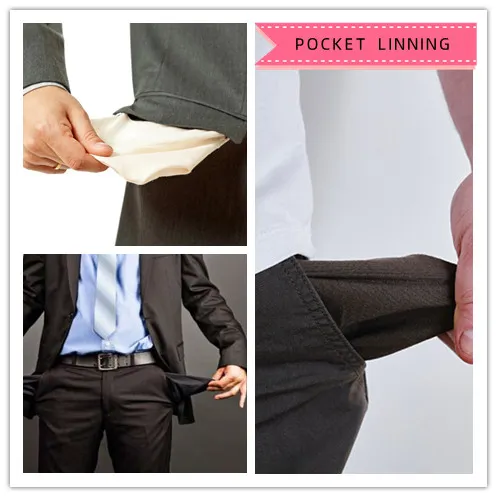
In the garment industry, some components are easily visible and are often discussed—outer fabric, silhouetting, trim, and final coloring. Others are largely ignored by the ultimate consumer, but they have a significant impact on comfort, durability, and perceived quality. The practice of pocket lining is classified as a serious business.
Despite rarely being mentioned in the description of goods, pocket lining has an effect on the feel of a garment during regular wear, the duration of its stress-bearing properties, and the way it functions in different climates and scenarios.
For those involved in design, manufacturing, and procurement, understanding what pocket lining is and what to utilize as pocket lining is not considered a minor technical endeavor—it’s a strategic decision regarding material.
This article provides a comprehensive, industry-specific description of pocket lining, its functional purpose, common materials, selection criteria, and best practices in different categories of garments, with a significant focus on the professional production of garments.
Understanding Pocket Lining in Garment Construction
Pocket lining is the fabric that forms the inner pocket of a garment or bag. Contrastingly, the shell fabric is chosen primarily for its function, which is to define the appearance of the garment; the pocket lining is primarily utilized for its performance, comfort, and structural stability.
From pants and skirts to coats, shirts, uniforms, and outerwear, pocket linings are frequently damaged by friction, repeated hand movement, weight, and laundering. A bad choice of pocket lining can lead to early wear, misforming of the garment, or discomfort for the wearer, even when the outer fabric is of exceptional quality.
In the manufacturing of industrial clothing, the treatment of bolsillo’s content as a functional component of fabric is more frequent. This distinction is significant, as it affects the selection of material, the weight of fabric, the structure of weave, and the process of finishing.
Why Pocket Lining Matters More Than Most People Think?
Many people don’t realize how much Pocket lining there is because it is concealed. However, from a manufacturing and consumer perspective, its importance is paramount.
First, the process of lining a pocket directly affects the longevity of the garment. Pockets have a high concentration of stress; this is especially true of workwear, denim, and outerwear. Items like phones, purses, keys, and tools consistently wear the fabric’s lining. If the lining has a low tear strength or an inability to withstand abrasion, the failure will occur before the shell fabric has demonstrated wear.
Second, the pocket’s lining affects the wearer’s comfort. Rough or flimsy fabric that isn’t breathable can feel uncomfortable against the skin, particularly in warm climates or lightweight clothing. In shorts and trousers, the lining of the pocket is often in direct contact with the body; this necessitates the importance of softness and moisture management.
Third, the practice of pocket lining has the potential to reduce costs and enhance efficiency. Selecting the appropriate material for the lining allows manufacturers to maintain a balanced amount of fabric while still achieving high efficiency in the cutting and sewing process, without negatively affecting the quality of the fabric.

Pocket Lining vs. Garment Lining: A Common Misunderstanding
One common misconception is that the practice of pocket lining and apparel lining is substitutable. While they may occasionally utilize similar substances, they have different purposes in structural usage.
The purpose of garment lining is to enhance the drape, simplify the wear, and improve the aesthetics of large areas. Conversely, pocket lining has a more specialized purpose; it supports load and is subject to higher mechanical stress.
As such, pocket lining fabric is often more powerful, more densely woven, or augmented, even when the garment is unlined or lightly lined.
Key Functional Requirements of Pocket Lining
From a professional perspective, a successful pocket liner must fulfill several functional requirements at once.
Mechanical power is unalterable. Pocket linings must tend to resist tears at the seams and the stress points, particularly at the openings and corners of the pocket.
The resistance to abrading is of equal importance. Repeated hand movement and direct contact with objects quickly degrade weak fibers.
Stability in dimensions is responsible for maintaining the shape of the pocket after washing and wearing, which prevents sagging or distortion.
Breathability and comfort are both important aspects of clothing that is worn near the body, particularly in summer apparel or uniforms that are worn for a long period of time.
Other practical factors include seability and the ease of cleaning and drying. The pocket’s lining should have a high speed that is not excessive in terms of needle damage, puckering, or broken threads.
What to Use as Pocket Lining: Common Fabric Options?
Selecting the items to use as pocket lining is based on the type of garment, the target audience, the price point, and the conditions used for finalization. Below are the most popular materials used in the apparel industry’s pocket lining.
-
Cotton Lining’s Pocket
Cotton continues to be one of the most popular and traditional materials for interior design.
Cotton fabric with a pocket for a soft, breathable hand feel, and a natural comfort is appreciated. They’re typically employed in casual pants, shirts, and lightweight jackets.
From a manufacturing perspective, cotton is simple to harvest and bind, which makes it appropriate for large volume production. It also has a successful record in clothing that is intended for warm climates or long wear.
However, cotton’s pocket lining may not have the necessary abrasion to be used in heavy-duty clothing unless augmented or blended. Also, the control of shrinkage and colorfastness must be exercised with care during the final stage of fabric processing.
-
Polyester Pocket Lining
Polyester is one of the most popular materials in modern fashion design, used as a pocket filling in general clothing.
The polyester fabric’s extra-long fibers provide high resistance to wear, the fabric’s porosity is also high, and it has a strong grasp. It’s typically found in uniforms, workwear, outerwear, and budget-friendly fashion lines.
Another beneficial attribute of polyester is its resistance to shrinking and wrinkling; this attribute helps to maintain the pocket’s shape following repeated washes.
Conversely, polyester may lack the breathability to be considered a natural fiber. For garments that are directly exposed to the skin, the fabric’s finish and the selection of yarns have a significant role in enhancing comfort.
-
Cotton and polyester combined in a single fabric pocket lining
Blended fabric is a combination of the properties of cotton and polyester. This material is popular for use in the pockets of many different garments.
Cotton-polyester fabric balancing is a combination of comfort, durability, and cost efficiency. These combinations are frequently employed in pants, shirts, and other casual clothing.
By altering the mixture ratio, manufacturers can precisely control the softness, strength, and moisture behavior of fabric in accordance with specific requirements of garments.
-
Twill fabric as a substitute for lining
Twill is frequently employed as a weave type for pocket lining, regardless of the fiber composition.
Twill fabric’s tear strength is increased, and its capacity to carry weight is enhanced when compared to regular fabric. This causes them to be ideal for denim, pants that carry goods, workwear, and outerwear.
The diagonal weave design facilitates the fabric’s flexibility under pressure while still maintaining its strength, which decreases the likelihood of a seam failure.
-
Poplin and Plain Weave Small Pocket Lining
Poplin and other common fabric types are often employed as pocket filling in lightweight clothing.
These fabrics are typically thinner, more smooth, and more breathable, which makes them ideal for shirts, short pants, and formal wear.
While they provide comfort and aesthetic value, plain weave pocket linings are not well-suited for heavy or practical clothing because of their lower abrasion resistance.
-
denim pocket lining and heavy clothing
In the manufacturing of denim, the process of pocket filling is of paramount importance.
Denim’s pocket lining must have the capacity to withstand high pressure, frequent cleaning, and large item storage. For this reason, fabric with a high degree of weaving, such as cotton or cotton polyester, is commonly employed.
In high-end denim, the pocket’s lining may also have brand-related features, but the primary concern is still performance.
-
Penetrating Lining for formal and custom garments
In tailored pants, suits, and formal jackets, the necessity of a pocket is balanced with a delicate design.
Smooth cotton or other fabric that is both wrinkled and clean is often preferred to ensure comfort without adding weight. Extremely dense pocket coating can negatively affect the garment’s drape; this is unacceptable in custom clothing.
-
Lining for Work and Uniforms
Workwear and industrial uniforms have a severe impact on pocket lining.
In these scenarios, fabric with a pocket on the side is primarily utilized for its durability, tear resistance, and the capacity to be washed. Polyester or augmented blends are the most popular options in this category.
The failure of the pocket to lie flat in workwear often results in the premature rejection of the garment, even if the shell fabric is still intact.

Weight and Thickness Considerations in Pocket Lining
The weight of the fabric is critical, but it’s often disregarded in the selection of pocket lining.
Lightweight shoulder straps enhance the comfort of the pocket and reduce the bulk, but they may compromise the strength. Heavier fabric increases the garment’s durability, but it can also affect the garment’s design and appearance.
Professional manufacturers consider the weight of the pocket to be proportional to the weight of the shell in order to maintain structural harmony.
Sustainability and Pocket Lining Choices
Sustainability is increasingly important in the selection of a pocket liner.
Organic cotton, recycled polyester, and low-density dyed fabric are now being employed as materials for pocket filling in environmentally conscious companies.
Because the pocket material consumes less fabric volume than other materials used for shells, it provides an opportunity for brands to enhance sustainability metrics without significantly increasing costs.
Common problems with lining and how to avoid them.
The failure of the pocket is often caused by the mismatched fabric choice rather than by poor design.
Common concerns include wrinkling at stressful areas, excessive tearing, washing after shrinkage, and discomfort caused by poor breathability.
These issues can be avoided by making sure the properties of the pocket’s lining are consistent with the actual use of the garment.
How Manufacturers Choose Pocket Lining in Practice?
In professional settings that have a lot of variety, pocket lining is employed based on the following criteria:
The category of garments and their usage scenarios.
The price at which Target is targeting and the way it markets itself.
Washing and cleaning requirements
Efficiency of production and consistency of supply.
Instead of employing a singular fabric type that is employed across all products, experienced manufacturers specialize in tailoring their choices to each type of garment.
Pocket Lining as a Quality Indicator
Despite rarely being audible, the practice of pocket lining often serves as a silent signal of clothing quality.
High-end garments typically have significant, flat, and consistent pockets. Conversely, low-cost clothing is often limited by the thin, weak, or mislabeled pocket lining.
For those who have information and are professionals, the quality of pocket lining provides an understanding of the entire manufacturing process.
Conclusion: Choosing the Right Pocket Lining Is a Strategic Decision
What is the definition of a pocket liner, and what should be utilized as a pocket liner?
Pocket lining is a fabric component that directly affects the durability, comfort, and longevity of garments. Selecting the appropriate pocket lining is dependent on understanding the properties of the material, the purpose of the garment, and the production reality.
From cotton that is breathable to polyester that is durable and has a reinforced core, the best fabric for pocket lining is always dependent on the context. When selected with care, pocket lining increases the effectiveness of garments without drawing attention, doing its job without any visible haste or effort.
For brands that wear apparel, manufacturers, and professionals that source apparel, pocket lining is not considered a minor aspect. It’s a material decision that is based on the quality of the product, the technical merits of the product, and the value it will provide over time.