跳到内容
跳到内容 
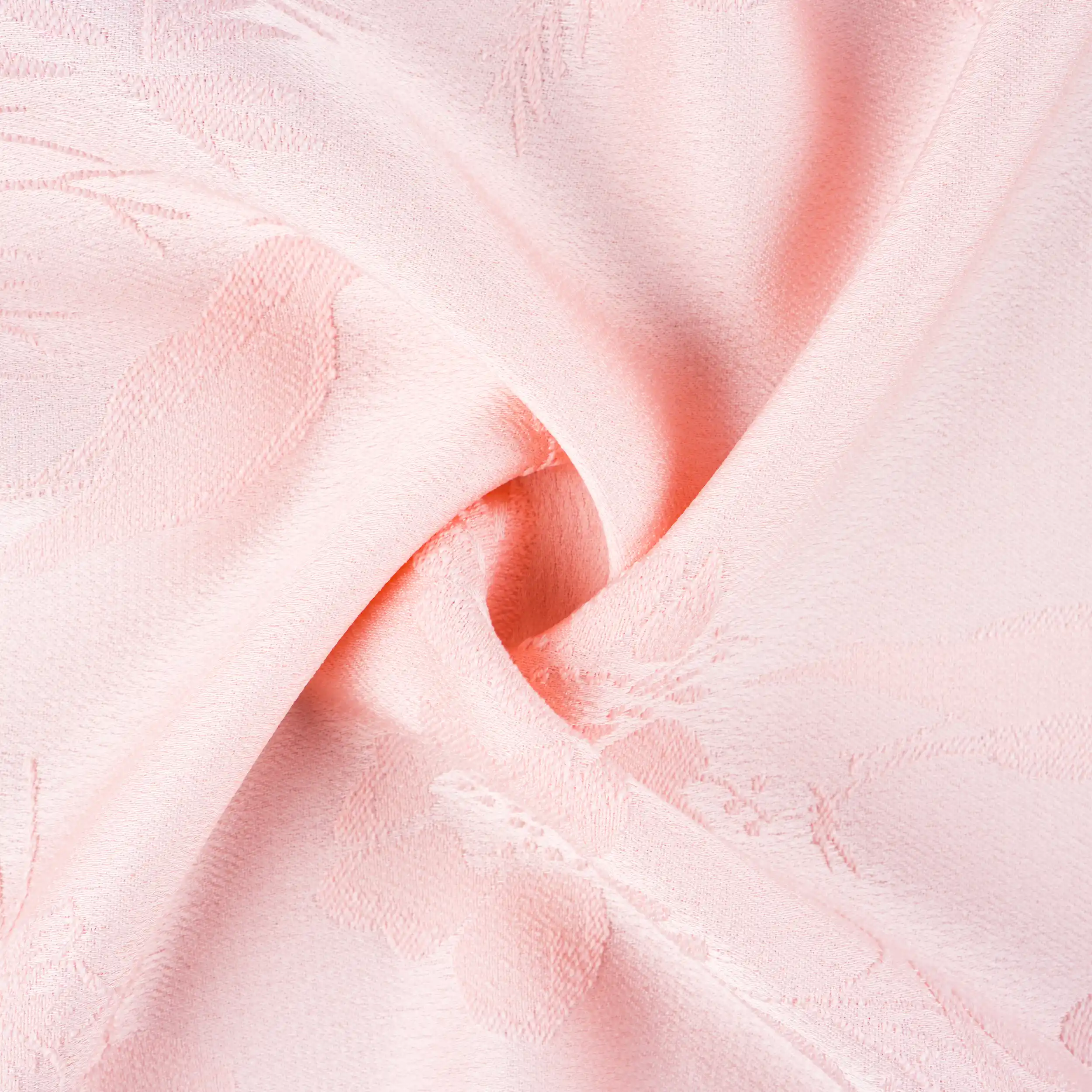
The choice between jacquard and polyester fabrics depends on the intended application, rather than one material being universally superior. According to textile performance studies by The Textile Institute, as well as testing methods defined by ASTM International and ISO 12947 (Textiles — Determination of the abrasion resistance of fabrics), jacquard fabric is the preferred choice for a premium appearance and complex woven patterns, as well as for luxury textile applications. However, polyester fabric offers advantages in terms of durability, cost efficiency, wrinkle resistance, and ease of maintenance.
대량 주문 is often the better choice for fashion, home textiles, and decorative products due to its sophisticated texture and visual appeal. Polyester fabric, however, is usually preferred for large-scale production, performance garments, and applications requiring strength and a long service life.
Introduction
For apparel manufacturers, home textile brands, and fabric buyers, selecting the right textile material is one of the most important decisions. Different fabrics offer different combinations of appearance, durability, comfort, maintenance requirements, and production costs. Jacquard and polyester are two widely discussed textile options because they serve both consumer and industrial applications.
However, the question of which is better, jacquard or polyester, does not have a simple answer, as the two fabrics are designed for different purposes. Jacquard is a weaving technique that incorporates decorative patterns directly into the fabric, while polyester is a category of synthetic fibres known for their strength, stability, and affordability.
In premium fashion markets, jacquard fabric is often chosen for its luxurious appearance and three-dimensional texture. It is commonly used for:
- High-end garments
- Decorative curtains
- Upholstery fabrics
- Luxury bedding
- Designer textile collections
Polyester fabric, on the other hand, dominates many commercial and industrial textile markets due to its excellent performance characteristics. It is widely used in:
- 스포츠웨어
- Uniforms
- Outdoor clothing
- 작업복
- Mass-market apparel
For textile manufacturers and buyers, the best choice depends on whether aesthetic value, functional performance, production efficiency, or long-term durability is the priority.
What Is Jacquard Fabric?
Jacquard fabric is a type of woven textile produced using a specialised jacquard loom, which controls individual warp yarns to create complex patterns directly within the fabric structure. Unlike printed fabrics, where designs are applied to the surface, jacquard patterns are formed by arranging woven threads.
This weaving method evolved from the invention of the Jacquard loom by Joseph Marie Jacquard in 1804, a development that revolutionised textile production by enabling the automatic control of individual yarn movements.
The unique construction method gives Jacquard fabric several distinctive characteristics:
- Intricate woven patterns
- Raised surface texture
- Better dimensional appearance
- Premium visual quality
- Long-lasting decorative effects
Because the patterns are part of the fabric structure itself, they generally do not fade or peel in the same way that printed designs may over time.

Manufacturing Process of Jacquard Fabric
The production of jacquard fabric involves precise control of yarn positioning during weaving. Compared with ordinary plain or twill fabrics, jacquard weaving requires more complex machinery and production planning.
The process typically includes:
-
Yarn Preparation
Different yarn colors, thicknesses, or fiber types may be selected depending on the desired design.
-
Jacquard Weaving
The jacquard mechanism controls individual warp threads, allowing manufacturers to create detailed patterns such as:
- Floral designs
- Geometric structures
- Logos
- Artistic patterns
-
Fabric Finishing
After weaving, the fabric may undergo finishing processes to improve:
- Softness
- Color stability
- Surface appearance
- Performance characteristics
This complex manufacturing process makes jacquard fabric more design-oriented compared with basic synthetic fabrics.
Key Characteristics of Jacquard Fabric
-
Premium Appearance
One of the biggest advantages of jacquard fabric is its sophisticated appearance. Because patterns are woven rather than printed, the fabric usually has a richer texture and more luxurious visual depth.
This makes jacquard especially suitable for products where appearance is a major purchasing factor.
Examples include:
- Luxury dresses
- Hotel textiles
- Decorative furniture fabrics
- High-end bedding collections
-
Complex Design Capability
Jacquard technology allows manufacturers to create highly detailed patterns that are difficult to achieve with traditional weaving methods.
Design possibilities include:
- Multi-color patterns
- Textured surfaces
- Large repeat designs
- Customized brand patterns
For fashion brands and premium textile suppliers, this flexibility provides greater design differentiation.
-
Structural Durability
Although jacquard is often associated with luxury products, its woven structure also provides good durability. Since the design is integrated into the yarn structure, the appearance can remain stable after long-term use.
However, durability depends heavily on:
- Fiber composition
- Yarn quality
- Fabric density
- Finishing technology
For example, a polyester jacquard fabric may provide higher abrasion resistance than a delicate silk jacquard fabric.
What Is Polyester Fabric?
Polyester fabric is a synthetic textile primarily made from polyethylene terephthalate (PET), a polymer commonly used in modern fibre manufacturing. Thanks to its combination of strength, affordability and low maintenance, polyester is one of the most widely produced textile fibres in the world.
Unlike ‘jacquard’, which describes a weaving technique, ‘polyester’ describes the fibre itself. Polyester fabrics can be produced using different structures, including:
- Plain weave
- 트윌 직조
- Knitted structures
- Brushed surfaces
- Blended constructions
This versatility allows polyester to be adapted for many different industries.
Manufacturing Process of Polyester Fabric
Polyester fabric production generally involves several stages:
-
Polymer Production
PET polymer is created through chemical reactions involving raw materials such as ethylene glycol and terephthalic acid.
-
Fiber Spinning
The polymer is melted and extruded through spinnerets to form continuous filaments.
-
Yarn Formation
The fibers are stretched and processed to achieve desired:
- 강도
- Elasticity
- Thickness
- Surface characteristics
-
Fabric Formation
The polyester yarns are woven or knitted into different textile structures.
-
Finishing Treatment
Additional treatments may improve:
- Moisture management
- Softness
- Anti-static performance
- UV resistance
Key Characteristics of Polyester Fabric
-
High Durability
One of polyester’s greatest advantages is its mechanical strength. Polyester fibers resist:
- Abrasion
- Stretching
- Shrinking
- Wrinkling
This makes polyester suitable for garments and products requiring frequent use.
-
Easy Maintenance
Polyester fabric is popular among manufacturers and consumers because it is easy to care for.
Advantages include:
- Quick drying
- Shape retention
- Machine washing compatibility
- Reduced ironing requirements
These properties make polyester especially valuable for uniforms, workwear, and everyday clothing.
-
Cost Efficiency
Compared with many natural fibers and decorative fabrics, polyester is economical to produce. Large-scale manufacturing benefits from:
- Stable supply chains
- Consistent quality
- Lower production costs
This is why polyester remains a preferred choice for mass-market textile production.

Jacquard Fabric vs Polyester Fabric: Key Differences
Although jacquard and polyester are often compared, they represent different textile concepts. Jacquard refers mainly to the fabric construction method, while polyester refers to fiber composition. Jacquard fabric can be made from polyester fibers, creating polyester jacquard fabrics that combine decorative patterns with synthetic performance.
| 특징 | 자카드 원단 | Polyester Fabric |
| Definition | A woven fabric construction method with complex patterns | A synthetic fiber-based textile |
| Main Advantage | Premium appearance and texture | Strength and cost efficiency |
| Design Capability | Excellent for complex patterns | Depends on printing or weaving method |
| 내구성 | Depends on fiber type and construction | Generally high durability |
| Maintenance | Depends on fiber composition | Easy care and quick drying |
| Typical Market | Luxury textiles and decorative applications | Mass apparel and industrial textiles |
Which Fabric Has Better Durability?
Durability depends on the specific fabric structure and fiber composition rather than simply whether a textile is jacquard or polyester.
Polyester fabric generally has an advantage in everyday durability because polyester fibers naturally provide:
- High tensile strength
- Excellent abrasion resistance
- Good dimensional stability
- Resistance to wrinkles
According to textile abrasion testing methods such as ISO 12947, synthetic polyester fabrics often perform well in applications requiring repeated friction and washing.
Jacquard fabric durability varies significantly depending on the fiber used. For example:
- Polyester jacquard: High durability and decorative appearance
- Cotton jacquard: Comfortable and breathable
- Silk jacquard: Premium but more delicate
Therefore, when durability is the main requirement, polyester fabric is often the practical choice. When appearance and texture are equally important, jacquard fabric provides additional value.
Advantages of Jacquard Fabric
Jacquard fabric remains highly valued in the textile industry because it combines artistic design capability with structural performance. Unlike printed fabrics, where patterns are added onto the surface after fabric production, jacquard designs are created directly through weaving. This gives the fabric a stronger visual effect, better texture, and a more premium appearance that is difficult to replicate with ordinary textiles.
For fashion brands, interior designers, and home textile manufacturers, jacquard fabric provides strong product differentiation. A garment or textile product made with jacquard can achieve a more luxurious appearance without relying on additional printing or surface decoration.
-
Luxury Appearance and Unique Texture
The most recognizable advantage of jacquard fabric is its appearance. The weaving process allows manufacturers to create complex patterns, including:
- Floral patterns
- Geometric designs
- Abstract textures
- Brand-specific patterns
- Three-dimensional woven effects
Because these patterns are integrated into the fabric structure, jacquard textiles often have a richer surface effect compared with printed materials.
This makes jacquard particularly suitable for:
- Premium fashion collections
- Luxury hotel textiles
- Decorative curtains
- Upholstery materials
- High-end bedding products
-
Better Design Flexibility
Jacquard weaving provides designers with greater creative freedom. Manufacturers can customize patterns, colors, and textures according to specific market requirements.
For brands seeking exclusive textile designs, jacquard offers advantages such as:
- Custom pattern development
- Different yarn combinations
- Multi-color woven effects
- High-end visual presentation
This design flexibility is one reason jacquard fabrics continue to be popular in premium textile markets.
-
Enhanced Fabric Structure
Because jacquard patterns are formed through weaving, the fabric often has a more structured surface compared with simple woven fabrics.
Depending on the fiber composition, jacquard fabric can provide:
- Good dimensional stability
- Improved texture retention
- Strong visual depth
- Better decorative performance
However, buyers should understand that jacquard performance depends heavily on the selected fiber. A polyester jacquard fabric will generally provide stronger durability and easier maintenance than a delicate natural fiber jacquard.
Advantages of Polyester Fabric
Polyester fabric has become one of the most widely used textiles globally because it provides a practical combination of performance, affordability, and manufacturing efficiency.
For large-scale apparel production, sportswear, uniforms, and industrial textiles, polyester is often preferred because it can meet demanding performance requirements while maintaining competitive production costs.
-
Excellent Strength and Durability
One of polyester fabric’s most important benefits is its mechanical strength. Polyester fibers are naturally resistant to stretching, abrasion, and repeated use.
Key advantages include:
- High tensile strength
- Good abrasion resistance
- Low shrinkage
- Long service life
These properties make polyester suitable for products that require frequent washing and continuous use.
Common applications include:
- School uniforms
- 작업복
- Sports apparel
- Outdoor jackets
- 산업용 섬유
-
Easy Care and Maintenance
Polyester fabric is popular among consumers because it requires relatively little maintenance.
Compared with many natural fibers, polyester provides:
- Faster drying
- Better wrinkle resistance
- Easier washing
- Better shape retention
For commercial apparel programs, these characteristics reduce maintenance requirements and improve customer satisfaction.
-
Cost-Effective Production
From a manufacturing perspective, polyester provides significant economic advantages.
Reasons include:
- Large-scale fiber availability
- Stable production processes
- Consistent quality
- Lower raw material costs
For brands producing large quantities of clothing or textile products, polyester allows manufacturers to achieve reliable quality while controlling production expenses.
-
Performance Customization
Modern polyester fabrics can be engineered for specific applications through advanced finishing technologies.
Additional treatments can improve:
- Moisture management
- UV resistance
- Anti-bacterial properties
- Water repellency
- Flame resistance
This adaptability allows polyester to serve many specialized industries beyond traditional apparel.
Application Comparison: Jacquard Fabric vs Polyester Fabric
The choice between jacquard and polyester depends largely on the product purpose. Some applications prioritize appearance and luxury, while others require durability, affordability, and functional performance.
Jacquard Fabric Applications
Jacquard fabric is commonly used in products where visual appeal and texture are important.
Typical applications include:
-
Fashion Apparel
Jacquard is often used for:
- Dresses
- Jackets
- 정장용
- Designer clothing
The woven patterns provide a premium appearance suitable for high-value products.
-
홈 텍스타일
Jacquard is widely used in:
- Curtains
- Sofa fabrics
- Decorative cushions
- Luxury bedding
Its textured appearance helps create elegant interior designs.
-
Hospitality Products
Hotels and premium accommodation providers often use jacquard textiles because they create a sophisticated atmosphere.
Examples include:
- Decorative fabrics
- Bedding collections
- Interior coverings
Polyester Fabric Applications
Polyester is preferred in applications where performance and cost efficiency are priorities.
Common uses include:
-
스포츠웨어
Polyester is widely used because it offers:
- Moisture control
- Lightweight construction
- Quick drying
-
Uniforms
Industries such as education, healthcare, and manufacturing use polyester uniforms because they withstand frequent washing and daily wear.
-
Outdoor Textiles
Polyester is commonly found in:
- Outdoor jackets
- Bags
- Tents
- Protective fabrics
Its durability and weather resistance make it suitable for challenging environments.
Jacquard Fabric and Polyester Fabric Application Guide
| 애플리케이션 | Recommended Fabric | Main Reason |
| Luxury clothing | 대량 주문 | Premium patterns and texture |
| Designer fashion | 대량 주문 | Strong visual differentiation |
| Curtains and upholstery | 대량 주문 | Decorative appearance |
| 스포츠웨어 | Polyester fabric | Lightweight and moisture management |
| School uniforms | Polyester fabric | Durability and easy maintenance |
| 작업복 | Polyester fabric | High abrasion resistance |
| Outdoor products | Polyester fabric | Strength and weather performance |
| Cost-sensitive mass production | Polyester fabric | Lower production cost |
How to Choose Between Jacquard and Polyester?
The best choice depends on the product’s purpose, target market, and required performance.
Choose Jacquard Fabric When:
Jacquard is the better option when the priority is:
Premium Appearance
If the product needs a luxury look or unique texture, jacquard provides stronger visual impact.
적합한 용도:
- Fashion collections
- Decorative textiles
- Premium home products
- Design Differentiation
Brands that want exclusive patterns and customized appearances often choose jacquard because the weaving technology provides more creative possibilities.
Choose Polyester Fabric When:
Polyester is usually the better choice when performance and practicality are the main considerations.
High-Frequency Use
For products exposed to repeated washing and daily wear, polyester provides excellent durability.
Examples:
- Uniforms
- 작업복
- Sports clothing
- Large-Scale Manufacturing
For wholesalers and manufacturers requiring stable supply and competitive pricing, polyester offers significant advantages.
Q1: 샌드 워싱 공정은 최종 제품에 어떤 이점을 줍니까?
- Is jacquard fabric better than polyester?
Neither fabric is universally better. Jacquard fabric is better for premium appearance, complex designs, and decorative applications, while polyester fabric is better for durability, affordability, and easy maintenance.
- Is jacquard fabric durable?
Yes, jacquard fabric can be durable depending on the fiber composition and weaving structure. Polyester jacquard generally provides higher durability than delicate natural fiber jacquards.
- Is polyester fabric good quality?
Yes. Polyester fabric is considered a high-performance textile because it offers excellent strength, wrinkle resistance, quick drying, and long-term durability.
- Is jacquard fabric expensive?
Jacquard fabric is generally more expensive than basic polyester fabrics because it requires specialized weaving technology and more complex production processes.
- Which fabric is better for clothing?
The best choice depends on the clothing type. Polyester is suitable for sportswear, uniforms, and everyday clothing, while jacquard is preferred for fashion garments requiring decorative designs.
- Can polyester fabric replace jacquard fabric?
Polyester can replace jacquard in applications where performance and cost are more important than decorative appearance. However, it cannot fully replace jacquard when unique woven patterns and luxury texture are required.
결론
The purpose of the comparison between jacquard and polyester fabrics is not to determine an absolute winner, but to select the right material for the intended application. Jacquard fabric is ideal for fashion, luxury home textiles, and decorative products thanks to its superior visual appeal, unique woven patterns, and premium texture. Polyester fabric, on the other hand, offers excellent durability, affordability, and low-maintenance performance, making it a practical choice for everyday apparel, uniforms, sportswear, and industrial applications.
The ideal solution for textile buyers and manufacturers is often determined by balancing aesthetics, performance and production requirements. In some cases, combining both technologies — such as with polyester jacquard fabric — can provide the advantages of both materials, offering attractive woven designs with the strength and maintenance benefits of polyester.
Understanding the differences between the two fabrics enables brands and manufacturers to make better material choices, improve product quality, and create textiles that meet market expectations.