跳到内容
跳到内容 
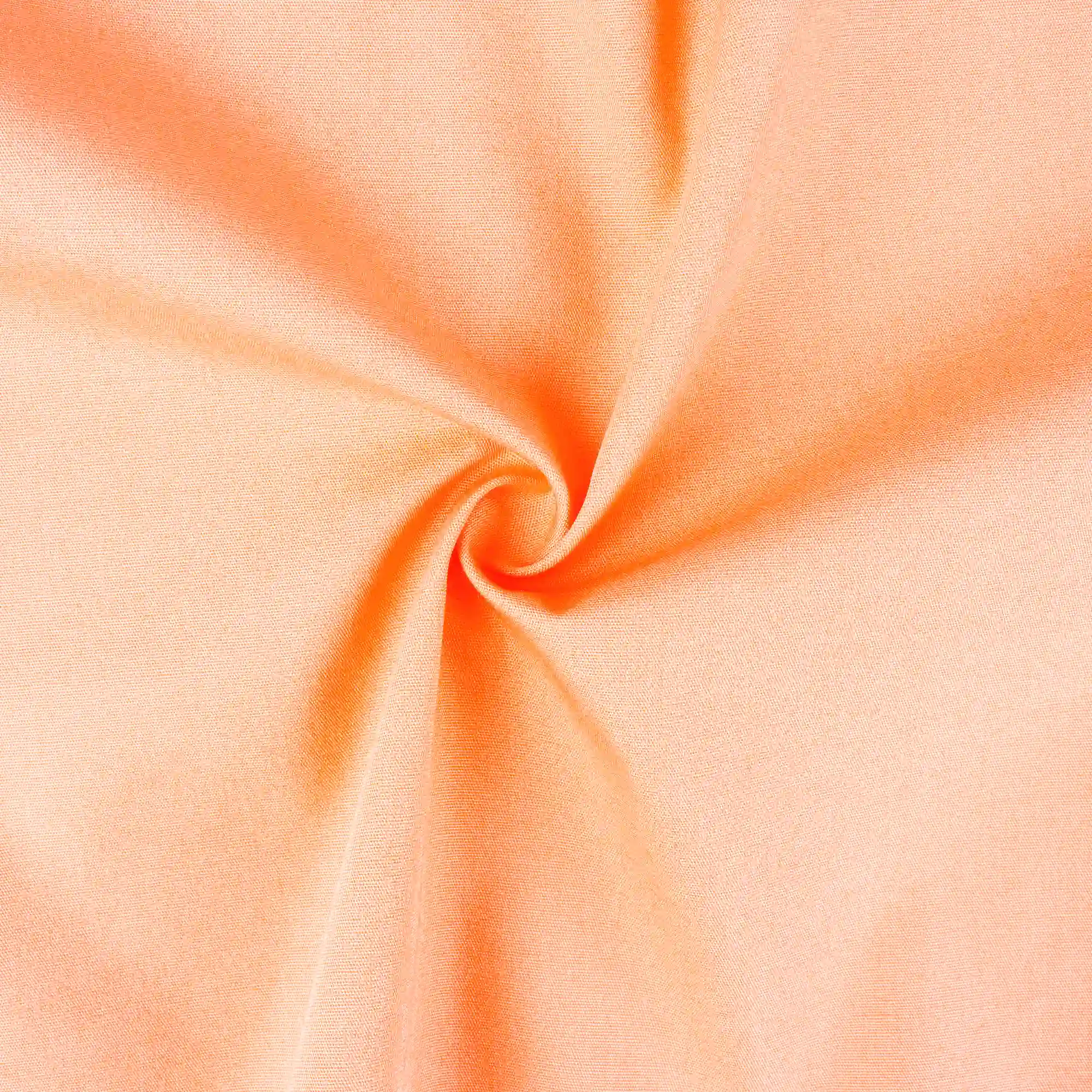
Solid poplin is a plain-weave fabric that is made in a single, uniform colour and does not have any printed patterns, stripes or textured designs. It combines the smooth surface and durability of the poplin weave construction with the versatility of a solid colour. According to textile engineering references and fabric manufacturing studies, poplin is traditionally woven using fine warp yarns and slightly thicker weft yarns to create a tightly woven fabric that is breathable, crisp, durable, and lightweight. Modern apparel research also notes that solid poplin fabrics are widely used in shirts, dresses, uniforms, bedding, and fashion garments due to their excellent colour consistency, clean visual appearance, and adaptability to both casual and formal textile applications.
Understanding What “Solid Poplin” Really Means in Modern Textile Manufacturing
In the global textile and apparel industry, fabric terminology can be confusing for consumers, sourcing managers, fashion start-ups, and newer garment manufacturers. Frequently used terms include:
- Popelina
- Sarga
- Sateen
- Oxford
- Chambray
- Jersey
– canvas However, many buyers still struggle to fully understand what these fabric descriptions mean in terms of practical textile production. One of the most commonly misunderstood phrases is ‘solid poplin’.
At first glance, the phrase may seem simple, but in textile manufacturing, it combines two separate concepts:
- The fabric construction (poplin)
- The visual colour style (solid)
Understanding both elements is essential because fabric selection directly affects:
- Garment comfort
- Breathability
- Caída
- Durabilidad
- Apariencia
- Printing behaviour
- Maintenance performance
- Commercial value
The word ‘poplin’ refers to a tightly woven plain-weave fabric characterised by:
- Fine horizontal ribs
- Smooth surface texture
- Lightweight structure
- Crisp hand feel
- Balanced durability
Historically, poplin fabrics were originally produced using silk and wool combinations in Europe, but modern poplin is now commonly manufactured from:
- Cotton
- Poliéster
- Cotton-polyester blends
- Rayón
- Stretch fibres
Meanwhile, the term ‘solid’ indicates that the fabric uses:
- One consistent colour
- No prints
- No stripes
- No plaid patterns
- No decorative woven graphics
This means that the fabric’s surface has a clean, uniform appearance throughout the entire textile roll.
Today, solid poplin fabrics have become extremely important across:
- Fashion manufacturing
- School uniforms
- Hospitality textiles
- Medical apparel
- Ropa de trabajo
- Camisas casuales
- Dresses
- Bedding products
- Corporate garments
because they combine:
- Simplicity
- Professional appearance
- Versatile styling
- Affordable production
- Reliable performance
In modern fashion supply chains, solid poplin is especially valued because it balances:
- Cost efficiency
- Mass-production compatibility
- Print adaptability
- Dye consistency
- Easy garment construction
As sustainability and performance textiles continue evolving, poplin fabrics are also undergoing innovation through:
- Organic cotton yarns
- Recycled polyester fibers
- Acabado resistente a las arrugas
- Moisture management technology
- Eco-friendly dyeing processes
What Is Poplin Fabric? Understanding the Core Fabric Structure
To fully understand the phrase ‘solid poplin’, it is important to first examine what poplin fabric actually is.
Poplin is a plain-weave fabric, a tightly woven textile, and a lightweight to medium-weight material. It is traditionally recognised for its smooth surface, crisp texture, subtle rib effect, durability and breathability.
The defining feature of poplin lies in its weave structure. During weaving, finer warp yarns run vertically and slightly thicker weft yarns run horizontally, creating a subtle ribbed appearance while maintaining a clean, relatively flat surface.
The basic plain weave construction can be represented by alternating over-under yarn intersections:
| Warp Direction | Weft Direction |
| Over | Under |
| Under | Over |
| Over | Under |
| Under | Over |
This balanced weaving structure contributes to fabric stability, dimensional consistency, wrinkle resistance, and long-term durability. Compared with more complex weaves such as twill or satin, poplin remains structurally simple, cost-efficient, and highly versatile. Historically, early poplin fabrics were associated with luxury European textiles. However, modern industrial textile manufacturing has transformed poplin into one of the most widely used fabrics globally due to its efficient weaving process, scalability and adaptability across fibre types.
Today, poplin can be produced using:
- es naturalmente hipoalergénica, transpirable y suave. El
- Polyester blends
- Spandex blends
- Rayon mixtures
- Sustainable fibres
This flexibility allows manufacturers to tailor poplin’s performance for different industries, including fashion apparel, corporate uniforms, hospitality, healthcare garments, bedding, and children’s clothing.
Poplin’s popularity also stems from its ability to balance softness, crispness, lightweight comfort, and professional appearance, which is why it is widely used in button-down shirts, dresses, blouses, school uniforms, and medical scrubs across global apparel markets.

What Does “Solid” Mean in Textile Terminology?
The second part of the phrase, ‘solid poplin’, refers to the fabric’s visual design style.
In textile terminology, ‘solid’ means one uniform colour, with no repeated graphics, woven patterns, printed motifs, stripes or checks. A solid fabric maintains consistent colouration across the entire textile surface.
Examples include solid black, navy, white, and beige poplin, which all fall under the solid poplin category.
This differs significantly from printed poplin, plaid poplin, striped poplin, floral poplin, and jacquard poplin, where additional visual patterning is introduced.
Solid-colour fabrics remain extremely important in apparel manufacturing because they provide maximum versatility, easier styling coordination, simplified cutting layouts, a cleaner professional appearance, and lower production complexity.
In commercial garment production, solid poplin fabrics are especially preferred for uniforms, formal shirts, corporate wear, minimalist fashion, and hospitality apparel because solid colours project professionalism, cleanliness, elegance, and visual consistency.
Solid fabrics also simplify inventory management, dye matching, mass production, and colour standardisation, which is critical in large-scale garment manufacturing operations.
Key Characteristics of Solid Poplin Fabric
Solid poplin fabrics possess several characteristics that explain their widespread popularity across global textile markets.
Main Characteristics of Solid Poplin
| Propiedad | Description |
| Surface texture | Smooth and crisp |
| Weave type | Plain weave |
| Apariencia | Clean and uniform |
| Peso | Lightweight to medium |
| Breathability | Good airflow |
| Durabilidad | Strong for daily wear |
| Wrinkle resistance | Moderado |
| Print compatibility | Excelente |
| Caída | Structured yet flexible |
One of the biggest strengths of solid poplin is its balanced performance profile.
Unlike very heavy fabrics, which sacrifice comfort, or extremely soft fabrics, which lack structure, poplin provides a combination of comfort, structure, durability, and a professional appearance. This makes it suitable for warm climates, office wear, school uniforms, and all-day garments.
The tight weave construction also contributes to lower transparency, better shape retention, and improved garment tailoring compared with looser woven fabrics.
Solid Poplin vs Other Common Fabrics
Understanding solid poplin becomes easier when compared with other major fabric categories commonly used in apparel manufacturing.
Fabric Comparison Table
| Muselina con textura arrugada y bordado | Surface Feel | Peso | Breathability | Usos típicos |
| Popelina lisa | Smooth and crisp | Light-medium | High | Shirts, uniforms |
| Sarga | Diagonal texture | Medium-heavy | Moderado | Workwear, pants |
| Oxford | Textured weave | Medio | Moderado | Camisas casuales |
| Sateen | Silky smooth | Medio | Moderado | Luxury bedding |
| Chambray | Soft lightweight | Light | High | Casual apparel |
| Lona | Rough heavy texture | Heavy | Baja | Bags, utility wear |
Compared with twill fabrics, poplin typically offers a lighter weight, smoother surface, and sharper appearance. Compared with Oxford fabric, poplin feels less textured, looks more formal, and drapes more cleanly. Meanwhile, compared with sateen, poplin is less glossy, more durable for daily wear, and easier to maintain. These comparisons help explain why solid poplin remains highly popular in business casual fashion, uniforms, warm-weather garments, and everyday apparel manufacturing.
Why Is Solid Poplin So Popular in Fashion and Uniform Industries?
The widespread use of solid poplin in the apparel industry is no coincidence. Manufacturers and fashion brands continue to choose poplin because it offers several commercial advantages.
One major reason is its versatility.
Solid poplin can be used for:
- Ropa formal
- Casual wear
- Uniforms
- Promotional garments
- Minimalist fashion collections
This versatility reduces the complexity of sourcing for apparel brands.
In the uniform sector specifically, solid poplin is widely used because it provides a clean, professional appearance, durability under repeated washing, breathable comfort, and affordable large-scale production. Industries commonly using solid poplin uniforms include hospitality, healthcare, education, aviation, retail, and corporate services.
Fashion brands also favour solid poplin because it lends itself well to garment dyeing, embroidery, digital printing, screen printing and wrinkle-resistant finishing. Additionally, solid poplin is extremely well-suited to warm-weather fashion due to its airflow, lightweight comfort, and crisp appearance, which explains its popularity in summer shirts, dresses, lightweight blouses, and resort wear.
Minimalist fashion trends have further increased demand for solid-colour fabrics because consumers increasingly prefer timeless garments, neutral colour palettes, clean aesthetics and versatile wardrobe pieces. Solid poplin aligns perfectly with these market trends. With these market trends.

Sustainability Trends and the Future of Solid Poplin Fabrics
The textile industry is currently undergoing a major transformation, driven by environmental regulations, sustainability expectations, consumer awareness, and circular economy initiatives. As a result, solid poplin fabrics are evolving significantly.
Modern manufacturers are increasingly producing poplin using organic cotton, recycled polyester, low-impact dyes, water-saving finishing systems, and biodegradable fibre blends.
Sustainable solid poplin fabrics are becoming especially important for eco-fashion brands, hospitality sourcing, corporate ESG initiatives, and ethical apparel manufacturing.
Another growing trend is performance-enhanced poplin.
Advanced textile technologies now enable poplin fabrics to incorporate moisture-wicking finishes, antimicrobial treatment, wrinkle resistance, UV protection, and stretch functionality, helping solid poplin to remain competitive against newer synthetic performance fabrics.
At the same time, digital textile manufacturing continues to improve colour consistency, dye precision, production efficiency and customisation flexibility, making solid poplin even more commercially scalable.
As global apparel markets continue to prioritise versatile fabrics, sustainable sourcing, easy-care garments and timeless aesthetics, solid poplin is likely to remain one of the most important fabrics in mainstream apparel manufacturing.
FAQ About Solid Poplin
What does solid poplin mean?
Solid poplin refers to a plain-weave poplin fabric made in one consistent color without patterns or printed designs.
Is it solid poplin cotton?
It can be made from cotton, polyester, blended fibers, or stretch yarn combinations depending on the application.
Is poplin fabric breathable?
Yes. Poplin is generally lightweight and breathable, making it suitable for warm-weather clothing.
What is solid poplin used for?
It is commonly used for shirts, dresses, uniforms, blouses, bedding, and professional apparel.
Is poplin better than twill?
Neither is universally better. Poplin is lighter and smoother, while twill is heavier and more textured.
Does solid poplin wrinkle easily?
Poplin may wrinkle moderately, but wrinkle-resistant finishes are commonly added in modern textile production.
Conclusión
The term ‘solid poplin’ combines two important textile concepts:
The durable, plain-weave structure of poplin fabric and the clean, visual simplicity of a solid colour design.
Together, these characteristics create one of the most commercially successful and versatile fabrics in the global apparel industry.
Solid poplin remains highly valued because it strikes an effective balance between comfort, breathability, professional appearance, durability, affordability, and styling flexibility. Its smooth surface, crisp texture, and lightweight structure make it suitable for a wide variety of products, including shirts, dresses, uniforms, hospitality garments, medical apparel, casual fashion, and bedding products.
As textile manufacturing continues to evolve through sustainable fibres, eco-friendly dyeing, performance finishing and digital production technologies, solid poplin fabrics are also becoming more advanced and environmentally responsible.
For fashion brands, garment manufacturers, sourcing managers, and consumers alike, understanding the meaning of solid poplin is essential for making informed decisions about fabric selection, garment comfort, product durability, commercial scalability, and modern fashion performance. Ultimately, solid poplin continues to succeed because it offers the simplicity, versatility, and reliable everyday functionality that the modern textile market consistently demands.