コンテンツへスキップ
Article Summary:
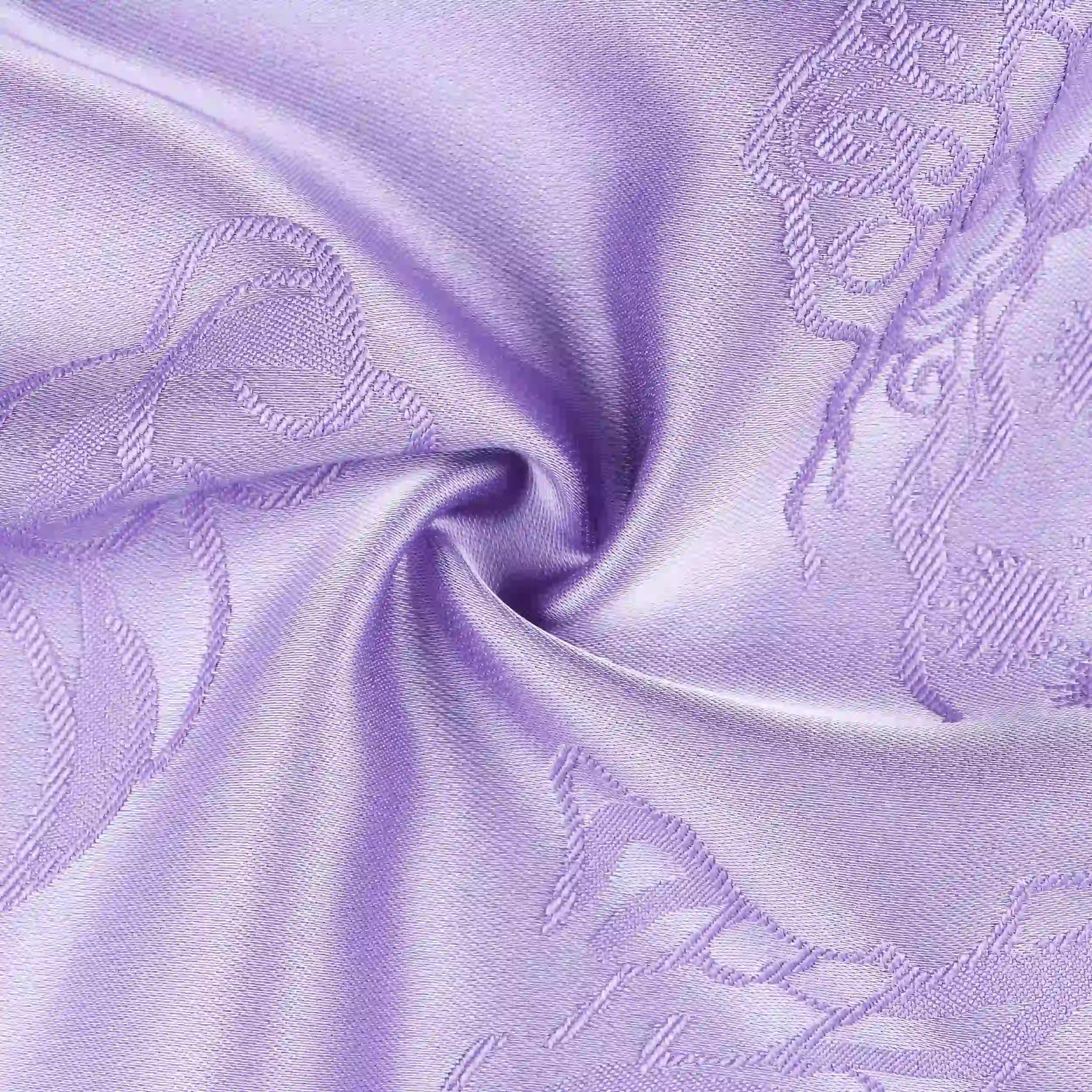
ジャカード生地 is commonly recognized for its intricate patterns, structural integrity, and superior presentation.
According to the Textile Fibers, Dyes, and processes (Kadolph, 2007), as well as the industry standards published by The Textile Institute, jacquard weaving can control the intricate patterns at the yarn-interspace level instead of the surface, resulting in a superior fabric durability and a long-term aesthetic performance.
This article provides a comprehensive, industry-oriented description of what jacquard fabric is composed of, including apparel, home textiles, upholstery, commercial interior design, and emerging technological applications. It also provides information on how to procure and choose the material. This is in line with the modern practice of manufacturing textiles.
Understanding Jacquard Fabric: Structural Basics
Jacquard fabric is any fabric that is produced using a jacquard mechanism that has control over each individual woven or knitted segment.
Unlike regular, woven, or satin fabric that has patterns created by repeated weave units, jacquard fabric is designed directly into the structure. This implies that the pattern is not a finished product, but rather an intrinsic component of the fabric’s composition.
From a manufacturing perspective, this structural approach has a higher resistance to abrasion, a longer lifespan of design, and a more stable dimensional configuration.
These attributes explain the common choice of jacquard fabric for applications that require both a visual appearance and a long lifespan. Modern jacquard machines, including electronic jacquard systems, have increased the complexity of design while still maintaining efficiency in production.

Apparel Applications of Jacquard Fabric
Jacquard fabric is crucial to the fashion and apparel industry, especially in the high-end and mid-range segments. Designers appreciate the jacquard fabric for its texture, structure, and visual complexity without necessitating heavy ornamentation.
In women’swear, jacquard fabric is typically employed for dresses, skirts, blazers, and coats. The fabric’s capacity to maintain shape is beneficial to tailored silhouetting, while the decorative patterns on the fabric eliminate the need for excessive surface ornamentation.
In menswear, jacquard is typically found in formalackets, waistcoats, and occasion wear that is valued for its simple design.
Knit jacquard, which is produced on machines that circle or flat, has become more popular in sweaters, cardigans, and knit tops. It’s more malleable than woven jacquard, but still retains the pattern’s clarity. This makes it ideal for modern fashion that focuses on comfort and a visual identity.
Home Textile Uses of Jacquard Fabric
One of the most common markets for jacquard fabric is domestic textiles. Curtains, drapes, bedspreads, cushion covers, and table linens often utilize jacquard structures to create complex patterns with long durability.
Jacquard curtains are appreciated for their weight, fabric quality, and capacity to block or filter light effectively. Because the design is fabricated rather than printed, the coloring material takes less time to fade, even after being exposed to sunlight for a long period of time.
In instances where bedding is applied, jacquard fabric is associated with luxury and is typically utilized in the hotel industry’s bed linens and decorative covers.
For interior design, jacquard has a variety of patterns: floral, geometric, damask, and abstract can all be combined into one fabric without negatively impacting the structural integrity. This flexibility is what makes jacquard the preferred choice in both traditional and modern interior design.
Upholstery and Furniture Applications
Jacquard fabric is commonly utilized in upholstery because of its superior durability and consistency of pattern. Sofas, armchairs, dinner chairs, and headboards are often decorated with jacquard fabric in residential and commercial settings.
Compared to standard-woven upholstery fabric, jacquard has a greater design capacity while still maintaining its mechanical properties.
Many upholstery jacquards are constructed with high-twist fabric or blended fibers in order to increase their resistance to abrasion and their tensile strength. These properties are standard in the industry, such as the Martindale or Wyzenbeek testing requirements.
In hospitality contexts, jacquard upholstery is typically employed because of its capacity to combine a brand’s identity with functional attributes. Hotels and restaurants often choose custom jacquard patterns that promote brand identification while also ensuring long-term effectiveness.
Commercial and Contract Textile Applications
In commercial interior design that is commercial, fabric that is jacquard is employed in addition to furniture. Wall covering, acoustic panels, and decorative dividers have become more common in recent years; these components are now incorporated into jacquard textiles in order to achieve both practical and aesthetic goals.
Office spaces and public buildings have benefited from jacquard fabric that contains flame-retardant fibers or treatments. These fabrics successfully meet regulatory requirements while still maintaining a delicate appearance, which makes them ideal for high-traffic areas. The structural stability of jacquard textiles is sufficient to support patterns that are frequently reused and cleaned.
Technical and Functional Uses of Jacquard Fabric
Beyond the decorative purpose, jacquard fabric has become more significant in technical and functional textiles. In automotive interiors, jacquard fabric is employed for seat covers and panel doors; the need for durability, consistency in pattern design, and differentiation in brand is crucial.
Sportswear and athletic apparel have increasingly adopted knit jacquard design to achieve functional zoning. By altering the number of stitches and the composition of the yarn, manufacturers can augment the breathability, insulation, or compression of specific areas of garment design without additional layers or seams.
In medical and healthcare textiles, jacquard knitting facilitates controlled elasticity and a textured surface, which is useful for applications like orthopedic supports and compression garments.
Sustainability Considerations in Jacquard Fabric Production
Sustainability has become a significant component of the textile selection process, and jacquard fabric production has responded to this accordingly. Because the patterns are embedded in the fabric, jacquard textiles often have less need for chemical treatments than printed materials, which diminishes the environmental impact of the fabric.
Increasingly, manufacturers are utilizing recycled polyester, organic cotton, and regenerated fibers in the design of jacquards. Additionally, modern electronic jacquard systems have a tendency to minimize wasteful yarns through precise oversight, which increases the efficiency of the material.
From a lifecycle perspective, the long durability of jacquard fabric contributes to sustainability by increasing the lifespan of the product and decreasing the frequency of replacement.

Jacquard Fabric Compared with Other Decorative Fabrics
| ムスクリンにしわ加工テクスチャー&刺繍 | Pattern Durability | Structural Strength | 一般的な用途 |
| ジャカード生地 | 非常に高い | High | Apparel, upholstery, home textiles |
| 幅が多用途に使える | 中程度 | 中程度 | Fashion, seasonal décor |
| Embroidered Fabric | High (localized) | Variable | Decorative garments, accents |
| Dobby Fabric | ミディアム | ミディアム | Shirts, light furnishings |
This comparison highlights why jacquard fabric is often preferred in applications requiring long-term visual and mechanical performance.
How to Choose the Right Jacquard Fabric for Your Application?
Jacquard fabric is valued for its intricate woven patterns, structural stability, and premium appearance. However, not all jacquard fabrics perform the same. Choosing the right type depends on how the fabric will be used, not just how it looks.
- Understand the End Application First
Before evaluating patterns or fibers, define where and how the fabric will be used.
| Application Area | Key Performance Needs |
| Apparel (fashion) | Drape, comfort, breathability |
| Home textiles | Durability, abrasion resistance |
| Upholstery | Strength, colorfastness |
| Hospitality & contract | Fire resistance, longevity |
| Decorative use | Visual depth, pattern clarity |
Application determines fiber choice, weave density, and finishing requirements.
- Select the Right Fiber Type
Authenticated fibers
- Cotton’s jacquard: Tender, ventilated, and appropriate for both clothing and bed lining.
- Silk fabric: Exquisite drape, most appropriate for high-end clothing.
- Best for: Those who want a simple, efficient, and powerful app.
Imposed fibers
- Polyester jacquard: Durable, wrinkle-resistant, cost-saving
- Nylon mixes: High tensile strength and resistance to abrasion.
- Best for: Upholstery, commercialization, and high-wear environments.
Combined Fiber
- Combine ease of use and long life
- Increased dimensional stability and more cost-effective control of costs
Best for: Large-Scale and versatile products
- Assess the weight and density of the fabric
Jacquard fabric’s varieties include lightweight to heavy-duty.
- Lightweight: Clothes, linings, and decorative accessories
- Middle weight: Cushions, covers for the window.
- Heavyweight: chair, table, and wall paintings.
A higher population increases the durability of the fabric, but decreases its drape.
- Consider the Scale of Assessement and the Complexity of Design
The selection of patterns has an effect on both aesthetics and functionality.
Small, imperceptible patterns
Large, bold patterns → powerful visual effect, increased fabric consumption
Consider:
- The alignment of patterns in the cutting and sewing process.
- The waste generated by fabric and the associated costs.
- Consider the necessity of Performance and the completion requirements
Depending on the purpose of the check, consider:
- Colorfastness in relation to cleaning and illumination
- Stability and shrinkage
- Resistance to anti-worming or toenail abrasion
- Extra functions: stain-resistant, flame-retardant, anti-icrobial
For commercial or institutional use, the final product is often required.
- Correspondence between Jacquard’s Type and specific Use cases
Apparel
- Less harsh yarns and more malleability
- A soft texture that supports the foot.
Breathable buildings
- Upholstery and Furniture
- High tensile strength
- Woven densely
- Incredible strength of locking fabric
Curtains and Decorative Fabrics
- Weighing the right amount
- The capacity to differentiate light of different intensities
- The stability of color in the sunlight
- Cost of performance: The Right Choice
Higher complexity is associated with higher costs, the reason for this is that:
- Lowering the weaving speed
- Increased amount of yarn used
- More complex loom design
Avoiding overly specific fabric attributes that will be wasted.
- Common Mistakes When Selecting Jacquard fabric
Designing first, then applying it to a problem.
Disregarding the texture of the backing (essential for relaxation)
Estimating the cost of pattern alignment incorrectly
Selecting high-end jacquard fabric for everyday use.
Market Trends and Future Outlook
The demand for jacquard fabric around the world continues to increase. This is primarily due to the fact that it is becoming more expensive, the interior of the fabric is being enhanced, and technological advances in the field of weaving and knitting have led to an increase in demand. Digital design tools and electronic jacquard systems are causing a quicker response and shorter production periods.
As consumers favor environmentally friendly, sustainable, and visually distinct textiles, jacquard fabric is predicted to remain important in multiple fields.
FAQ: Jacquard Fabric Applications
Q1: Is the fabric from jacquard suitable for regular wear?
Yes. Knitted jacquard and lightweight woven jacquard textiles are commonly employed in everyday clothing; this type of fabric offers comfort and durability.
Q2: What is the popularity of jacquard fabric in the upholstery industry?
The patterns are woven into the fabric, which allows them to withstand wear and fading. This is ideal for furniture that is frequently used.
Q3: Is it possible to have a sustainable fabric made of jacquard?
Yes. Many jacquard textiles utilize recycled or natural fibers, and they also need less chemical processing than printed textiles.
Q4: What is the distinction between jacquard and dobby fabric?
Jacquard facilitates individual control of the yarn for complex designs, whereas dobby fabric is limited to simpler, repeated patterns.
Q5: Is the jacquard fabric priced highly?
The costs are affected by the fiber type, the complexity of the design, and the production volume, but jacquard is typically beneficial due to its long design life and durability.
結論
Jacquard fabric is more than just a decorative fabric. Its design, durability, and versatility are ideal for a variety of purposes- from fashion and domestic textiles to professional interior design and technical applications.
For manufacturers, designers, and consumers who seek a harmonious combination of aesthetics and performance, jacquard fabric continues to be a popular choice that is both reliable and future-proof.