跳到内容
跳到内容 

Introducción: La importancia de elegir el tejido adecuado para las camisas
Al considerar los tipos de tejido, no todos se crean con la misma igualdad. La elección del tejido tiene un impacto significativo en la comodidad, durabilidad, diseño y funcionalidad de una camisa. Ya se trate de trajes de negocios, vestidos informales o polos de alto rendimiento, entender los distintos tipos de tejido es crucial para fabricantes, diseñadores y prescriptores.
Una elección adecuada del tejido favorece la vestibilidad (transpirabilidad, suavidad), el rendimiento (resistencia a las arrugas, solidez) y la estética (tejido, textura). En este artículo, analizamos los tipos de tejido más comunes que se emplean en camisas, sus estructuras, ventajas, compensaciones y los mejores escenarios de uso. Todo ello basado en los conocimientos del sector y en las principales fuentes de información textil.
Tipos de tejidos para camisas: Natural, sintético y mixto
Tejido de la camisa suele dividirse en tres categorías: fibras naturales, fibras sintéticas y combinaciones. Cada una tiene sus propias ventajas, que las hacen apropiadas para distintos tipos de camisas y mercados de destino.
-
Fibras autenticadas
El algodón: La fibra natural más popular para la producción de tejidos. La transpirabilidad, suavidad y comodidad del algodón contribuyen a la base de múltiples tipos de camisas.
Lino: Este tejido se obtiene del lino; tiene una excepcional capacidad de transpiración y un diseño texturizado. Es especialmente beneficioso en climas cálidos por su transpirabilidad.
Lana: Raramente utilizada en camisas informales, pero común en camisas de vestir de lana o Merino.
De seda: Extravagantes y lustrosas, las camisas de seda suelen reservarse para ropa formal o prendas de alta gama por la necesidad de doblarlas y cuidarlas.
Lyocell/ Tencel: Fibra parcialmente derivada de la pulpa de madera. El lyocell es transpirable, atrae la humedad, tiene buena caída y suele combinarse con otras fibras para la confección.
-
Fibras impuestas
Aunque las fibras sintéticas se encuentran con más frecuencia en camisas de alto rendimiento o económicas, también están presentes en tejidos que se utilizan cuando la durabilidad del tejido o su resistencia a las arrugas son de vital importancia.
El nailon se utiliza normalmente en combinación con otros tipos de tejido para camisas de vestir clásicas; también puede emplearse en camisas de rendimiento o para actividades al aire libre por su durabilidad y resistencia a la abrasión.
-
fibras mixtas
Muchos tipos de tejido que se utilizan para crear camisas tienen una combinación de fibras naturales y sintéticas que se benefician de sus propiedades. Por ejemplo, las mezclas de algodón y poliéster mejoran la resistencia a las arrugas; las mezclas de lino pueden añadir estabilidad; las mezclas de lyocell pueden mejorar la caída.

Tejidos y estructuras habituales de las camisas
Más allá del tipo de fibra, la estructura del tejido tiene un impacto significativo en el tacto, la caída y el rendimiento de una camisa.
-
Tejido estándar (popelina/tela ancha)
El tejido liso es el diseño más sencillo, con hilos de urdimbre y trama que se cruzan sucesivamente.
La popelina es un tipo de tejido común que se utiliza en prendas finas y suaves.
End-on-end es una variación del tejido estándar que consiste en alternar hilos de distintos colores. Esto produce un efecto sutil que suele emplearse en camisas de negocios.
-
La trama
El diseño de los tejidos Twill se caracteriza por un patrón diagonal de canalé, que ofrece una sensación más sustancial. TailorGeorge se centra en la durabilidad de la cola, su suavidad y la idoneidad del diseño tanto para prendas formales como informales.
El tejido de sarga tiende a resistir mejor las arrugas que el tejido normal y proporciona una superficie algo más densa.
-
Oxford (Basketweave)
El tejido llamado Oxford se produce mediante una trama de cesta (comúnmente dos hebras de hilo sobre dos), que produce un aspecto texturado y algo grumoso.
Las variaciones incluyen el uso de fibras más pequeñas en el diseño Pinpoint Oxford. Este diseño equilibra la naturaleza texturizada del tejido y el deseo de una camisa más refinada.
-
Espiga (Sarga que se rompe)
El tejido en espiga es un tipo de tejido que tiene el dibujo diagonal invertido, lo que crea una forma de "V".
Este tejido produce un dibujo refinado y un cuerpo adicional, que a menudo se incorpora a las camisas de vestir de alta gama.
-
Chambray
El chambray se compone de una urdimbre a base de índigo y un tejido más ligero; esta combinación proporciona un aspecto similar al denim, pero un tacto más suave y ligero.
El Glosario textil afirma que el chambray es más duradero que la popelina, pero sigue permitiendo la transpiración, y se suele utilizar tanto en camisas formales como informales.
-
Seersucker
El seersucker es un tejido que suele estar compuesto de algodón, lino o rayón. También se denomina tejido fruncido. La superficie arrugada del tejido facilita la evasión de la piel, lo que mejora el flujo de aire.
Ideal para camisas de abrigo, disminuye el tiempo de secado y mejora la transpirabilidad.
-
Franela
La franela es un tejido suave y flocado, tradicionalmente de lana, pero que ahora puede fabricarse en algodón u otros materiales.
-
Pana
La pana tiene "balsas" elevadas que se crean por el método de corte; el dibujo acanalado único de este tejido se atribuye a este método.
Utilizada en estilos informales o de gran tamaño, la pana ofrece calidez y un atractivo antiguo.
Consideraciones clave a la hora de elegir el tejido de una camisa
Para quienes eligen o adquieren tejidos específicos para sus camisas, hay varios factores, además de la fibra y el tejido, que influyen en el rendimiento y el ajuste:
-
Estacionalidad y comodidad
Transpirabilidad: El algodón, el lino y el chambray tienen una alta transpirabilidad, lo que es ideal para climas cálidos o de verano.
Aislamiento: La franela y la pana aumentan las propiedades térmicas de las camisas de otoño o invierno.
Transporte de la humedad: El lyocell y las mezclas de algodón de gama alta tienden a absorber la humedad, transportándola eficazmente. Otras fibras sintéticas son de secado rápido.
-
Formality & Appearance
formal/ business shirts: Poplin, pointy oxford, twill, and herringbone have a neat appearance and provide structure.
Smart-casual wear: Oxford and Chambray have a casual, textured appearance that doesn’t depart from formal wear greatly.
Casual wear/workwear: Denim, flannel, and corduroy are effective for rugged or recreational style shirts.
-
Maintainability and Durability
Wrinkle-resistance: Twill, Oxford, and synthetic fibers have a tendency to resist creasing that is superior to pure linen.
Ease of care: Cotton and other materials that are blended with silk are typically machine-washable; however, some types of silk, linen, or delicate fabric may need special treatment.
Wear and piling: Heavier weaves (corduroy, twill) tend to resist friction; lighter weaves (poplin) may show wear quickly.
-
Sustainability & Environmental Consequences
Eco-friendly fibers: Linen is environmentally friendly (flax has a low water consumption), and cotton is sustainable when organic or reused.
Lyocell: It’s typically touted for its environmentally responsible production and biodegradability.
Blends: Offer benefits that can be difficult to recycle; question the post-consumer recycling or environmental certification.
-
Price and availability of the fabric
Cotton poplin and Oxford are common and relatively budget-friendly.
Specialty fabrics (silk, linen, and Lyocell) are typically priced higher.
Blended fabric is an effective alternative to high-performance fabrics that don’t sacrifice too much natural fiber for comfort.

Applications: Matching Shirts Fabric to Use Case
Here are common scenarios and the probable fabrics that will be involved:
-
Business and formal wear
Poplin: Heavierweight, softer, and ideal for under jackets.
Pointy-O: slight design, but not professional.
Twill: A lot of feel, which is why it’s called that, plus it conceals the wrinkles.
Herringbone: Elegant design, ideal for custom shirts or notable items.
-
Smart-Casual/Office Casual
Oxford: Durable but still soft, it functions well when untucked or relaxed.
Chambray: A style similar to denim, but more breathable and less heavy.
End-on-end: Subtle two-tone design that is reminiscent of classic but possesses a slight let-up.
-
Warm-weather and summer shirts
Linen: Superb air flow, exceptional draping.
Seersucker: Puckered fabric increases airflow; it is wrinkle-resistant.
Lightweight cotton fabric/veil: Clean, bright, and refreshing.
-
Casual / Outside Wear
Flannel: Warm, finished product that is ideal for cooler seasons.
Corduroy: Textured and long-lasting, ideal for overshirts or farm-style shirts.
Denim: Rugged cotton fabric that serves as the basis for workwear-based shirts.
-
Sustainable or Eco-Friendly Routes
Lyocell/ Tencel combinations: Soft, strong, environmentally conscious.
Organic cotton or recycled cotton shirts: Reduce the environmental impact while still providing breathability and comfort.
Hemp (emerging): Not common, but mentioned by T.M. Lewin as a possible long-term fabric.
Pros & Cons: Major Shirt Fabrics at a Glance
Here is a summary comparison of major shirt fabric categories, their advantages, and trade-offs.
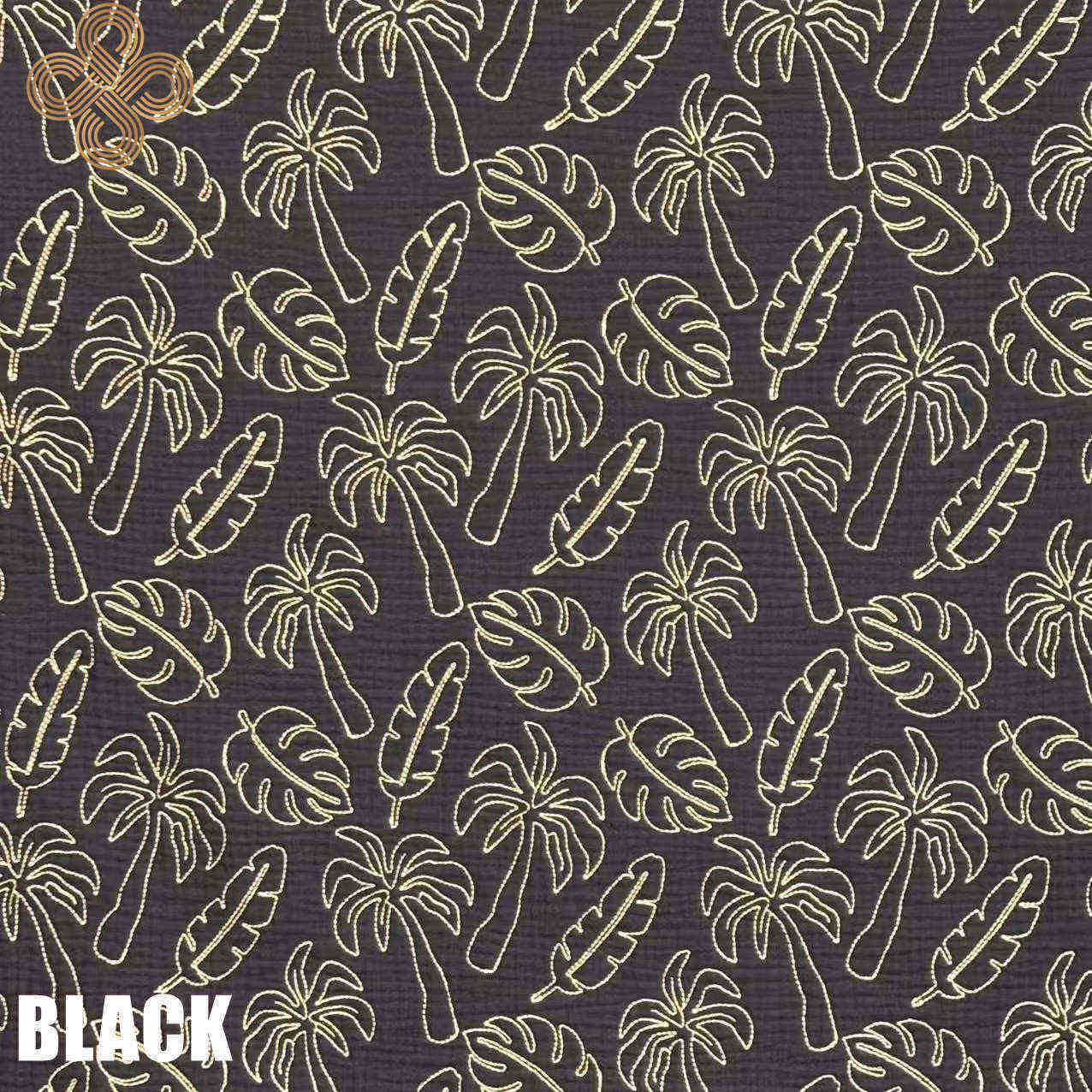
| Muselina con textura arrugada y bordado | Ventajas | Trade-offs / Limitations |
| Cotton Poplin / Broadcloth | Crisp, breathable, versatile | Can wrinkle, may be too light for colder climates |
| Oxford (Basket / Pinpoint) | Durable, textured, smart-casual | Heavier than poplin, less formal than twill |
| Twill / Herringbone | Durable, drapes well, hides wrinkles | May feel heavier, less airy in summer |
| Chambray | Soft, relaxed denim-like look, breathable | Lighter weight means less structure |
| Linen | Highly breathable, natural look, cool in heat | Wrinkles easily, can be rough, higher cost |
| Seersucker | Puckered texture improves airflow | Less smooth, distinct style not for all dress codes |
| Franela | Warm, soft, brushed finish | Heavier, suited to cooler weather only |
| Pana | Textured, durable, vintage appeal | Bulky, not ideal for formal wear |
| Seda | Luxurious, shiny, elegant drape | Delicate, creases, higher cost |
| Lyocell / Tencel | Eco-friendly, soft, moisture-managing | Can be pricier, less wrinkle-resistant than synthetics |
Industry Trends & Emerging Developments in Shirt Fabrics
-
Eco-Conscious Components
Sustainability is responsible for the demand for fabrics like organic cotton, Lyocell, and recycled fibers. This is especially true of premium and mid-market shirts. Tailors and brands are increasingly associated with environmental credentials in the design of shirts.
-
Technical and Performance Debating
Performance-shirting fabric is gaining popularity—it combines functionality with comfort.
Hypoxic ocean waters?
Elastane-based stretch twills.
Resistant wrinkles for business travel
-
Custom and High-end Shirting
High-end custom and made-to-measure shirtmakers (like Cimmino) focus on uncommon, fine, and special fabrics: extremely thin yarns, specialized weaves, and superior acabings.
Also, high-end shirtmakers take advantage of a large fabric library that includes poplin, Oxford, herringbone, and Dandy fabric.
-
Intelligent & Functional T-shirts
While this is less common in traditional shirts, innovations like altering the fibers, applying treatments that are antimicrobial, and maintaining stretchiness are all found in formal and casual shirt lines that are durable.
Practical Tips for Specifiers, Designers & Manufacturers
When choosing or procuring fabric for shirts, these practical considerations can be of help:
-
Define the purpose of the shirt
formal/ business-related → poplin, twill, pinpoint
Casual or casualty
Summer/average temperature of 15 °C or higher → linen, seersucker
-
Weave and weight
Lighter fabric that is typically used for dress shirts; heavier fabric that is intended for durability.
Think about the number of times you have used a particular fabric type and how it affects your design.
-
Fiber’s Choice and Combinations
Cotton promotes respiration, but combinations can augment performance.
For long-term viability, explore Lyocell, organic cotton, or reusable materials.
-
The End of the Game
Wrinkle-resistant coatings enhance the value of business or travel attire.
Brushed or napped surfaces (flannel) have a softness increase, but may need special care.
-
Suppliant Specifications
Request samples of fabric and conduct performance testing (reduction of shrinkage, colorfastness, pilling)
Incorporate the cost of production, the minimum order quantity, and the lead time for specialty fabric.
-
Attention to and guidance for consumers
Elaborate instructions for washing that take fabric type into consideration.
Educate consumers on care differences (e.g., linen wrinkles, silk care)
Conclusión
Shirt fabric is more than just a material choice; it affects the feel, appearance, wear, and performance of a shirt. From the time-tested poplin of cotton to the breathable linen, the rugged twill to the sustainable Lyocell, the appropriate fabric can augment the design of the garment and improve the user experience.
For business and formal wear, fibers like poplin, twill, and refined Oxford have a combination of both structure and elegance.
For fun, casual, and seasonal shirts, linen, seersucker, Chambray, and flannel.
For environmentally concerned companies, Lyocell and other cellulosic fibers offer both environmental benefits and practical applications.
Attention to detail, such as the way the fabric is woven, the quality of the yarn, and the final product, all of this contribute to a distinct fabric narrative.
Understanding the entire fabric landscape enables apparel brands, specifiers, and manufacturers to make decisions that benefit comfort, style, performance, and the evolving preferences of their customers.